Optimize · Savings Finders
Savings ranked by what they are worth.
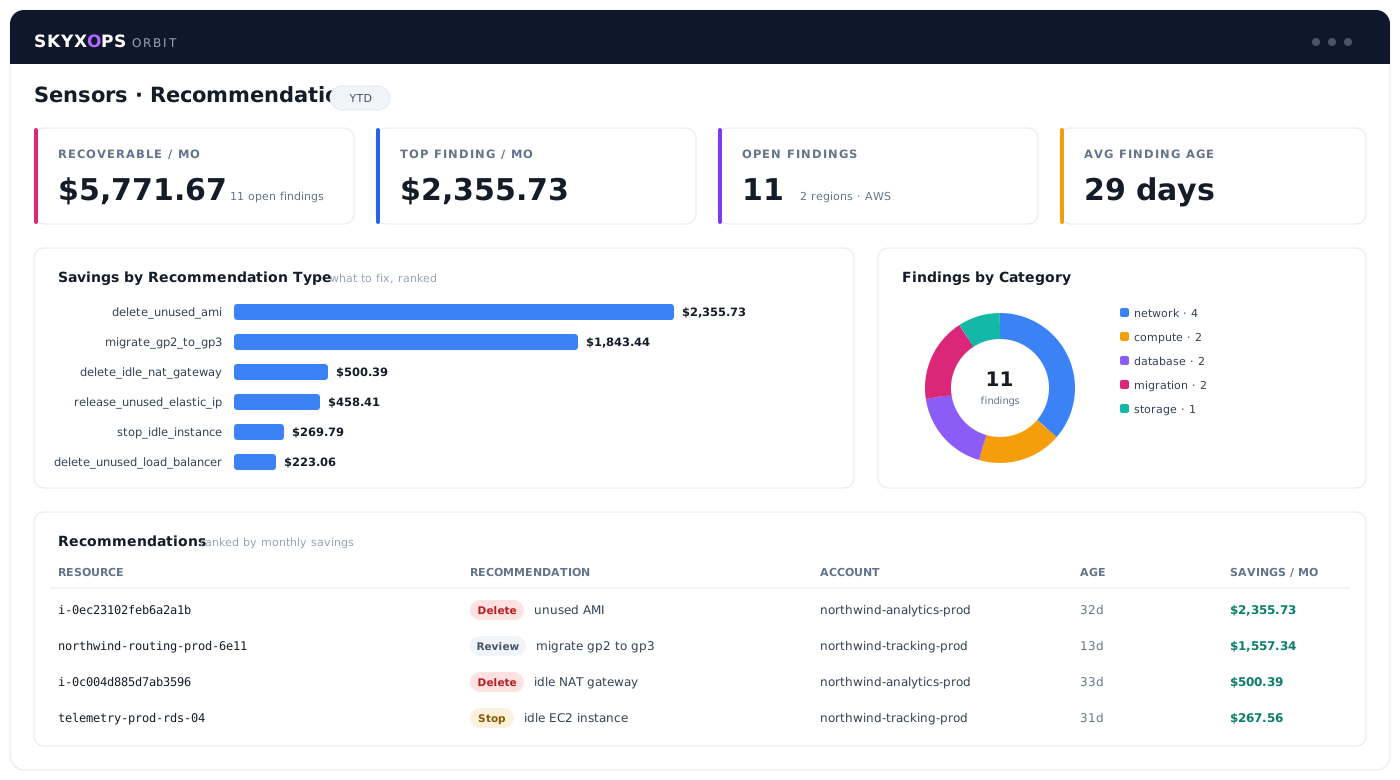
Savings Finders examine your accounts continuously and surface what could be saved, ordered by impact, with the evidence attached, so your team can decide what is actually safe to change.
How it works
1
Finders examine your accounts
- Run continuously across cloud and AI spend
- Look for waste, over-provisioning and unused commitment
2
Findings are ranked
- Scored by annualised impact, in dollars
- Utilisation evidence attached to every finding
3
Your team decides and acts
- SKYXOPS recommends. Your engineers make the change
- Realised savings tracked, so you see what landed
Ranked, with the evidence attached
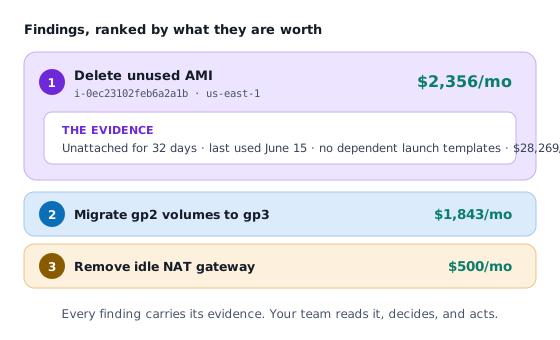
Every finding carries what it is worth per year and what it is based on, so the first ten rows are the ten worth doing.
- Annualised saving per finding, not a percentage
- Utilisation history behind the recommendation
- Confidence indicated where the data is thin
- Findings grouped by owner so each team sees its own
Storage, quietly the largest line
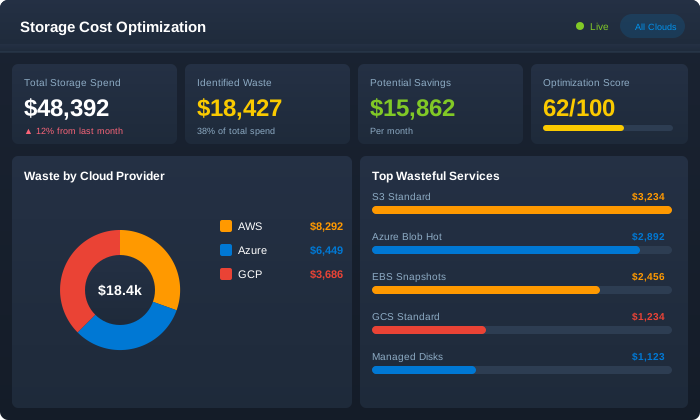
Storage rarely triggers an alarm because it grows slowly. Over a year it becomes one of the biggest recoverable numbers on the bill.
- Unattached volumes and forgotten snapshots
- Objects that belong in a colder class
- Lifecycle policies that were never applied
- Duplicate backup retention across accounts
Kubernetes, where requests outrun reality
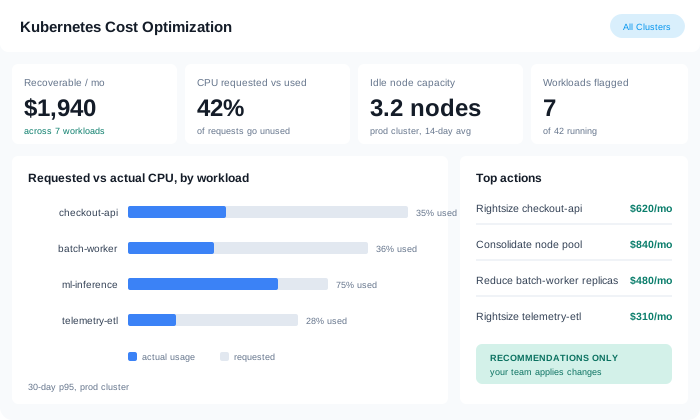
Clusters are usually sized for a load test that happened once. Requests and limits are set high and never revisited.
- Request-versus-actual usage per workload
- Idle node capacity across pools
- Over-provisioned limits by namespace
- Cost per namespace, per team and per service
Commitments and AI tokens
Two of the fastest-moving lines on a modern bill, and the two most often looked at last.
- Reserved Instance and Savings Plan recommendations from your real usage
- Coverage and utilisation of the pricing commitments you already hold
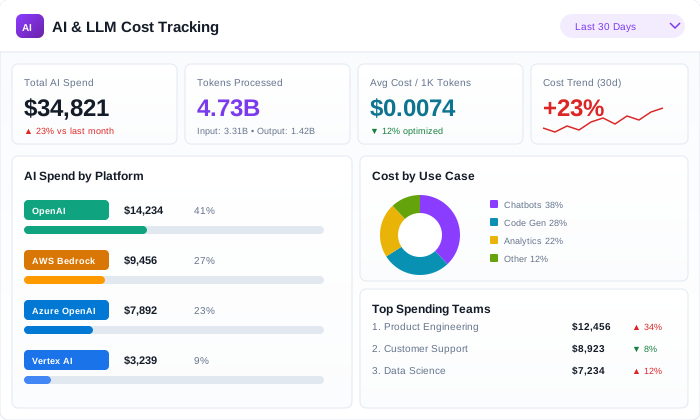
- AI and LLM spend broken down by model
- Where a cheaper model would do the same job
Questions about finding cloud & AI savings
No. Savings Finders surface and rank findings; your team decides what is safe and makes the change. SKYXOPS has read-only access and no ability to modify your resources.
We do not. You do. That is why each finding shows its utilisation history and flags where the data is thin. A recommendation is an input to a decision your engineers make, not an instruction.
Yes. Realised-savings tracking compares spend after a change against the projection, so a finding that was actioned can be told apart from one that was only closed.
Yes. Token tracking runs alongside cloud cost, broken down by model, so AI spend is ranked in the same list rather than in a separate tool.
Coverage and utilisation of existing Reserved Instances and Savings Plans are tracked, so under-used commitment shows up as a finding in its own right.